
Circadian rhythm disruption high performers burnout is caused by chronic stress that flattens the cortisol curve and suppresses melatonin, leading to a profound biological misalignment. This physiological breakdown creates a wired and tired state where the body loses its natural ability to regulate energy and rest; it cannot be fixed by simple relaxation alone. High performers must address the underlying hormonal dysregulation to reset their nervous system and reclaim their internal clock.
You are likely staring at your screen at midnight, physically drained yet mentally racing; only to find yourself relying on caffeine to bridge the gap the following morning. For the high performer, this persistent state of being wired yet tired is rarely a failure of discipline; it is a symptom of a fractured circadian rhythm. When your internal clock loses its synchronization with the natural world, your cortisol curve flattens and your cognitive edge begins to dull. This article examines the biological reality of executive burnout and the limitations of standard sleep hygiene for an overstimulated nervous system. You will learn the science behind the flattened cortisol curve, why high achievers often ignore these biological warnings, and how intentional environmental shifts can recalibrate your body. We will also outline the timeline for restoration, proving that peak performance requires a return to biological silence.
Wired and Tired: The High Performer’s Circadian Paradox
Entrepreneurs and executives often inhabit a state of physiological contradiction known as the wired and tired phenomenon. You arrive at the end of a grueling day physically depleted, yet as soon as your head hits the pillow, your mind accelerates. This is not merely a string of late nights or a temporary bout of jet lag; it is a profound manifestation of circadian rhythm disruption high performers burnout that indicates a systemic failure of your internal timing mechanisms.
In high-functioning environments, the body clock does not just drift, it breaks. Constant overstimulation from high-stakes decision-making, relentless blue light exposure, and the habitual suppression of biological fatigue signals force the nervous system into a state of permanent alert. Recent systematic reviews now categorize this condition as a chronobiological disorder. It is a state where the body’s endocrine system loses its ability to differentiate between the energy required for a morning pitch and the stillness required for midnight recovery.
For those seeking a Transformational Reset, understanding this paradox is the first step toward recovery. Unlike simple sleep deprivation, a chronobiological disorder involves a corruption of the hormonal handoff between cortisol and melatonin. When you ignore your body’s natural requirements for years, the feedback loop between the brain and the adrenal glands becomes blunted. You lose the sharp morning cortisol surge necessary for cognitive clarity and find yourself stuck with elevated evening stress levels that inhibit deep sleep. This biological misalignment cannot be solved with caffeine or weekend catch-up sleep; it requires a structured intervention to re-establish the body's sense of now.
The Chronobiology of Burnout: Understanding the Flattened Cortisol Curve
The "wired and tired" state is the result of Hypothalamic-Pituitary-Adrenal (HPA) axis dysregulation, a complex feedback loop between your brain and your adrenal glands. In a healthy physiological state, you experience a sharp Cortisol Awakening Response (CAR). This is a surge of energy that peaks roughly 30 minutes after waking, providing the cognitive drive needed to start the day. As the sun sets, cortisol should reach its lowest point, allowing melatonin to rise and initiate deep, restorative sleep.
Metric | Healthy Circadian Rhythm | Burnout Circadian Rhythm |
|---|---|---|
Morning Cortisol | Sharp peak (CAR) | Blunted or low surge |
Evening Cortisol | Lowest daily point | Elevated or "spiky" |
Melatonin Secretion | High and consistent | Suppressed or delayed |
HPA Axis Status | Responsive feedback loop | Dysregulated and desensitized |
For those experiencing circadian rhythm disruption high performers burnout, this curve flattens. A systematic review synthesizing 37 different studies confirms that burnout is not merely a psychological state; it is a measurable chronobiological disorder. The research shows that chronic stress forces the body to secrete cortisol at inappropriate times, which eventually desensitizes the adrenal glands. The result is a blunted morning peak, which leaves you feeling groggy regardless of how many hours you spent in bed, and elevated evening levels that keep your nervous system in a state of hyper-vigilance.
This hormonal misalignment extends to the cellular level. Constant stress triggers circadian genes in your liver and adrenal cells at the wrong times. When these genes are activated out of sync with the natural day-night cycle, your body loses its sense of "now." It no longer understands when to repair tissues or when to burn fuel for energy. This is why standard recovery methods often fail. To truly repair the HPA axis, one must look beyond mental relaxation and move toward immersive digital detox experiences that physically re-anchor the body to external biological cues. This structural repair is at the heart of a Transformational Reset, moving the focus from managing stress to restoring the fundamental biological handoff between activity and rest.
Why High Performers Are the Last to Recognize Biological Misalignment
High-functioning individuals often possess a psychological resilience that, while beneficial for business, acts as a barrier to biological awareness. This cognitive strength allows them to normalize chronic stress, viewing physiological warning signs as mere hurdles to be cleared rather than symptoms of a systemic collapse. Because the brain is wired for achievement, it frequently overrides the body’s distress signals, leading to a state where high performance masks deep physiological depletion.
This disconnect is exacerbated by the use of external stimulants and artificial cues to force performance. When the morning cortisol peak is blunted, high performers typically reach for high doses of caffeine to manufacture a state of alertness. Later, they utilize the blue light from multiple screens to sustain focus well into the evening. This reliance on external regulators creates a feedback loop that pushes the internal clock further out of alignment, masking the very red flags that signal a Survival Reset is necessary.
Central to this delay in recognition is a diminished state of interoception, which is the ability to perceive internal physiological signals. High performers often lose the capacity to feel the onset of a mid-afternoon energy crash or the rising tide of evening anxiety, categorizing these experiences as standard operational costs. By the time the manifestation of circadian rhythm disruption high performers burnout becomes undeniable, the HPA axis is already deeply dysregulated. Restoring this connection requires more than a weekend off; it demands immersive digital detox experiences designed to re-sensitize the nervous system to its own biological needs.
Beyond Sleep Hygiene: Why Your Nervous System Needs an Environment Shift

Standard sleep hygiene advice often fails high-functioning individuals because it treats a systemic biological collapse as a simple habit deficiency. For someone in the throes of circadian rhythm disruption high performers burnout, tape over bedroom LEDs or a caffeine curfew at noon is akin to repainting a house with a crumbling foundation. These behaviors assume a baseline level of physiological flexibility that no longer exists once the diurnal cortisol curve has flattened. When your nervous system is trapped in a state of hyper-vigilance, it does not matter how dark your room is; the brain does not feel safe enough to downregulate into deep, restorative sleep.
This lack of internal safety is often tied to your immediate environment. Your home and office are filled with micro-cues, such as the hum of a laptop or the specific lighting of your desk, that signal your HPA axis to remain in a state of high alert. To break this cycle, a radical pattern interrupt is required. A total change of environment, such as the immersive digital detox experiences found in Mallorca, provides the necessary distance from these triggers. By removing the environmental associations of stress, you allow the nervous system to finally recalibrate. This is the core philosophy behind a Transformational Reset, where the focus shifts from managing symptoms to physically restarting the biological clock.
High performers frequently attempt to brute-force a solution by pulling an all-nighter to reset their schedule. In a state of burnout, this strategy almost always backfires. Instead of resetting the clock, the additional sleep deprivation places further oxidative stress on brittle adrenal glands, deepening the exhaustion. Recovery requires a more sophisticated approach, such as a Survival Reset, which uses external biological anchors like cold exposure and natural light to signal a return to safety and rhythm.
The Mallorca Protocol: Resetting Your Biological Clock with Nature and Silence

True restoration requires more than removing stress; it necessitates the reintroduction of powerful biological signals. The Mallorca Protocol leverages the island’s unique geography to address circadian rhythm disruption high performers burnout through targeted environmental exposure. The process begins with photobiomodulation. By standing on the sea cliffs of the Serra de Tramuntana at dawn, your retinas receive the full spectrum of morning light. This high-intensity lux signal travels directly to the suprachiasmatic nucleus (SCN), the brain’s master clock. This immediate input tells the HPA axis to initiate the cortisol awakening response, effectively jump starting a system that has become desensitized to artificial office lighting.
The protocol then utilizes intense physiological stressors to break the pattern of a flattened cortisol curve. Within a Survival Reset, participants engage in cold exposure via the Mediterranean or managed ice baths. This controlled shock forces the nervous system to react, prompting a sharp, temporary rise in cortisol that mimics the natural peak missing in burnout. It is a recalibration tool that reminds the body how to mobilize and, subsequently, how to recover.
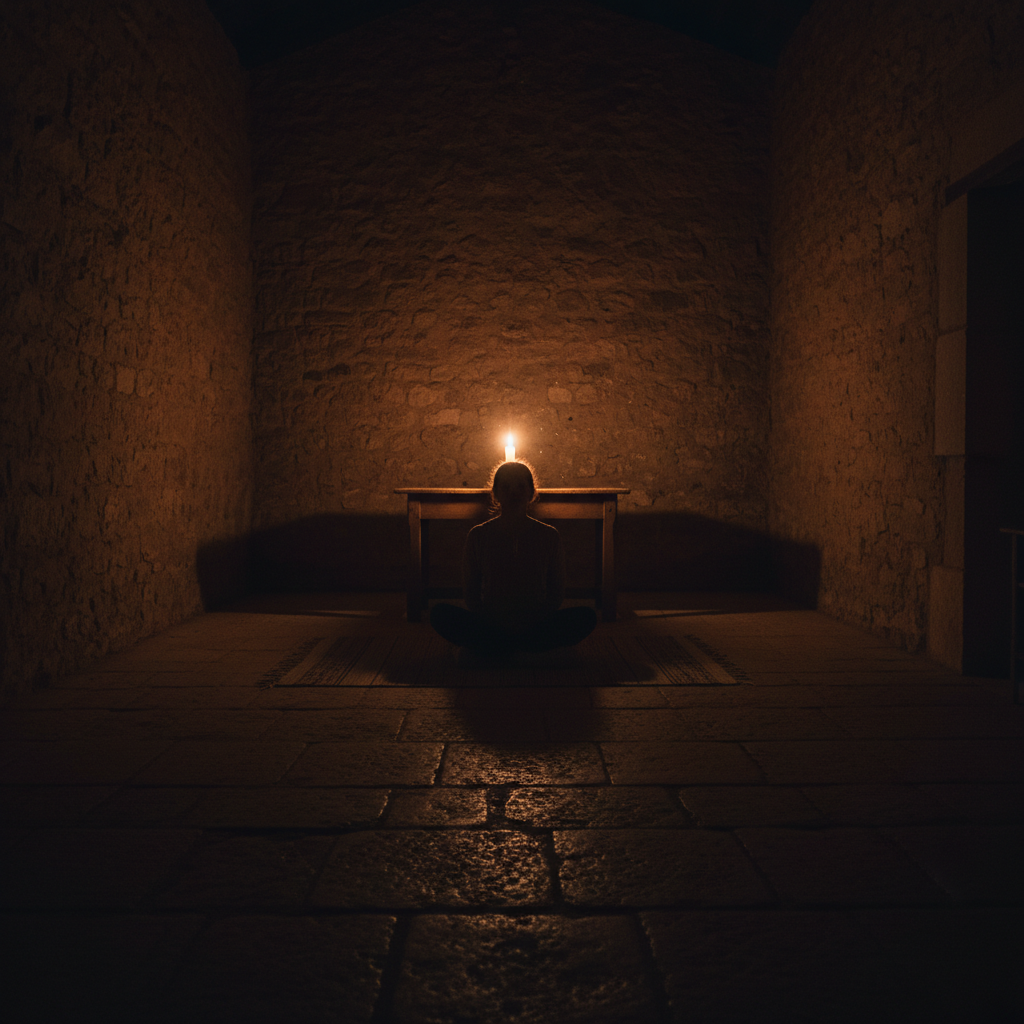
As the day transitions, the focus shifts to darkness and silence. The thick stone walls of a traditional Mallorcan finca provide a literal and figurative shield from digital noise. Silent meditation among centuries-old olive groves facilitates a profound sensory withdrawal. This lack of stimulation is essential for melatonin synthesis; it mimics the deep biological darkness required to initiate the nighttime repair cycle. By aligning these digital detox experiences with the natural movements of the sun, the Transformational Reset moves the body from a state of chronobiological confusion back into a rhythmic flow. This structured immersion ensures that the hormonal handoff between cortisol and melatonin is not just encouraged, but physically enforced by the environment itself.
How Long Does it Take to Restore Your Circadian Rhythm?
Recovering from circadian rhythm disruption high performers burnout is a two-stage process. While re-aligning your sleep schedule after a simple time zone change typically takes three to five days, restoring a dysregulated HPA axis requires a deeper physiological intervention. In cases of chronic burnout, the goal is not just a consistent bedtime but the repair of the hormonal handoff between cortisol and melatonin. This involves downregulating a nervous system that has been stuck in a hyper-vigilant state for months or years.
A four to seven day intensive immersion, such as a Survival Reset, provides the necessary window to move beyond superficial rest and into cellular recalibration. This timeframe allows the body to complete multiple cycles of photobiomodulation and controlled stress response, such as ice baths, which are essential for re-establishing the cortisol awakening response.
Intervention Phase | Duration | Objective |
|---|---|---|
Intensive Immersion | 4–7 Days | Re-anchor HPA axis through nature and light |
Biological Integration | 14–21 Days | Solidify new diurnal patterns in home environment |
Systemic Stability | 90+ Days | Full restoration of endocrine flexibility |
Measurable changes in mental clarity and morning energy often emerge by day four of a Transformational Reset. However, long term success depends on a strict integration window following these digital detox experiences. The brain requires consistent environmental cues once you return to your professional life to ensure the biological clock remains synchronized.